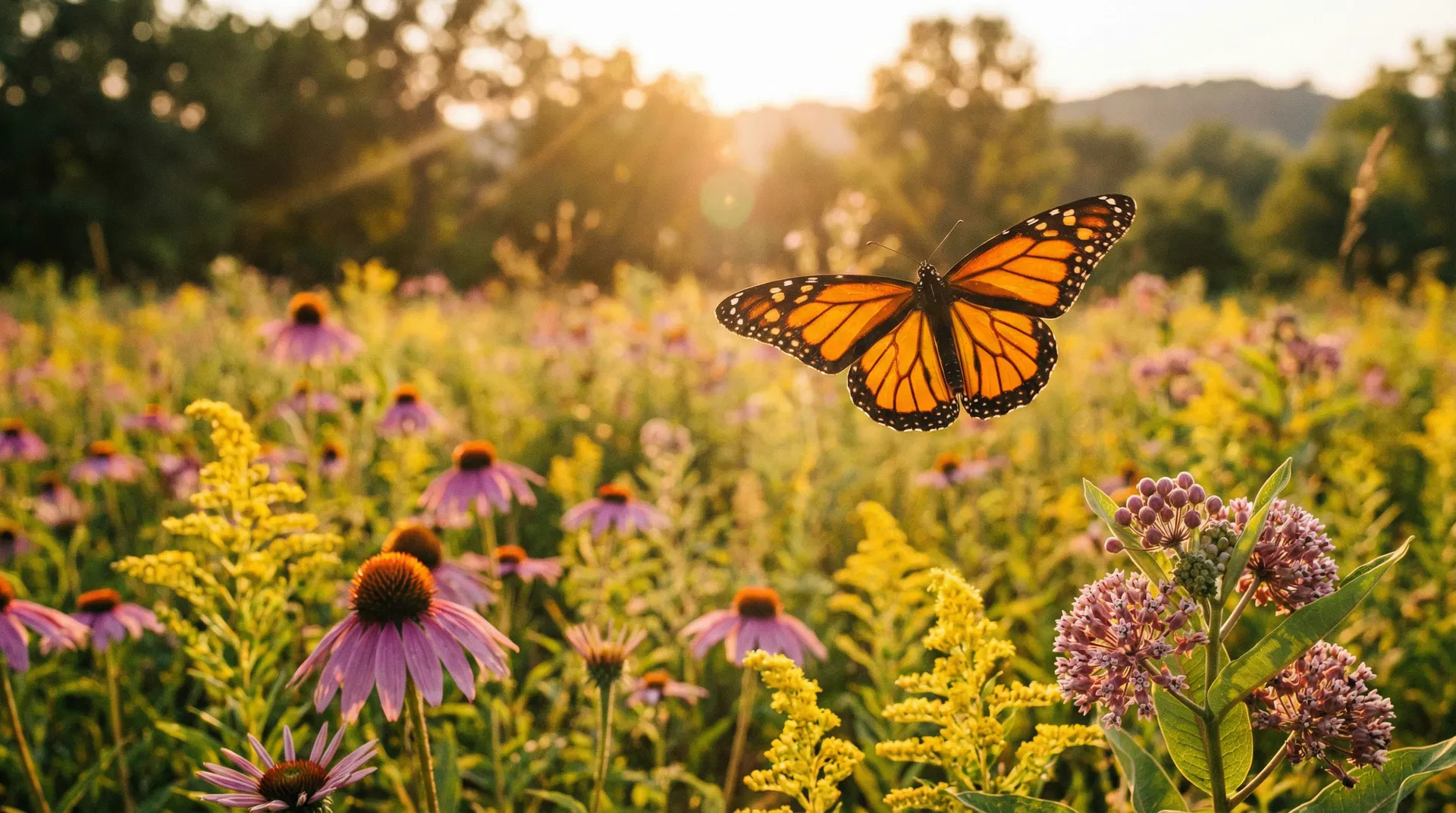
Monarch butterfly soaring over a wildflower meadow at golden hour

Danaus plexippus — Nature's Greatest Traveler

The Magnificent
Monarch Butterfly

Discover the extraordinary world of the monarch — from its epic 3,000-mile migration to its remarkable chemical defenses. A complete, research-backed guide for curious minds of all ages.

Begin the Journey
Advertisement

Google AdSense Ad Unit — Replace with your ad code

About This Guide

All content in this guide is based on peer-reviewed scientific research and verified against data from the U.S. Fish & Wildlife Service, USDA, IUCN Red List, and leading entomology programs. Statistics are sourced from published studies and conservation organizations. See our full source list at the bottom of this page.

Anatomy

The body of a monarch is a masterpiece of evolutionary engineering — built for long-distance flight, chemical warfare, and finding milkweed from miles away

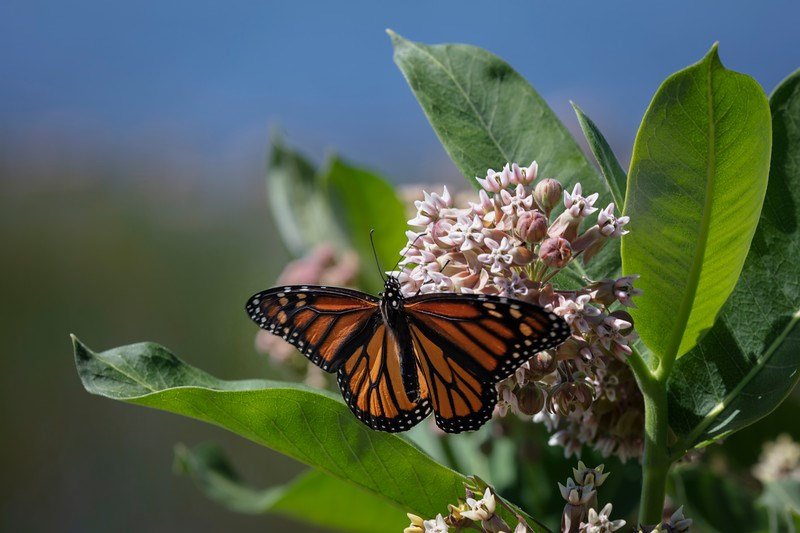
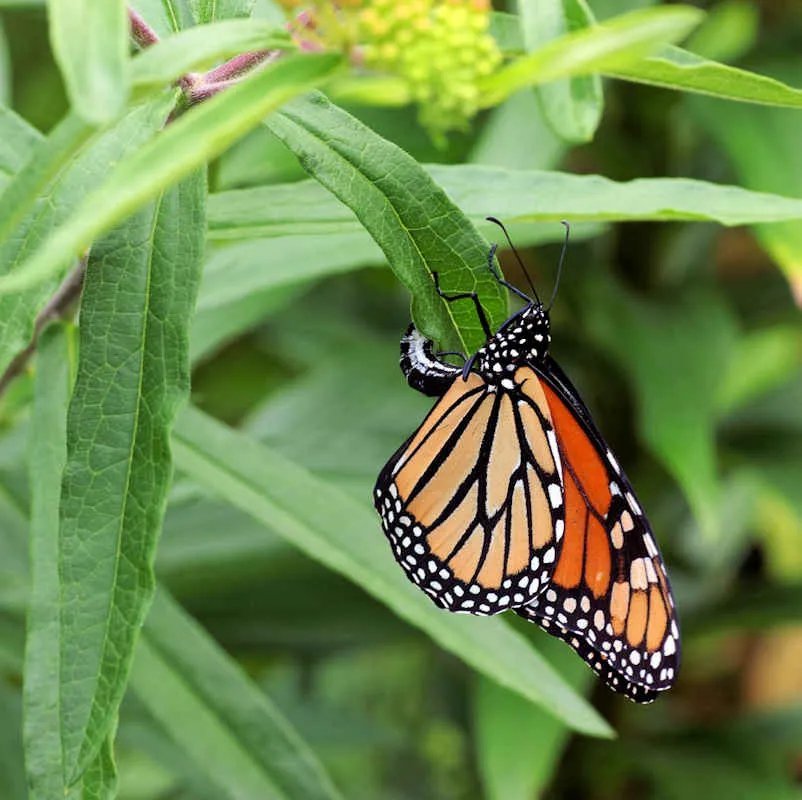
Monarch butterfly with wings fully spread showing vivid orange with black veins and white spots

Wings — Built for a 3,000-Mile Journey

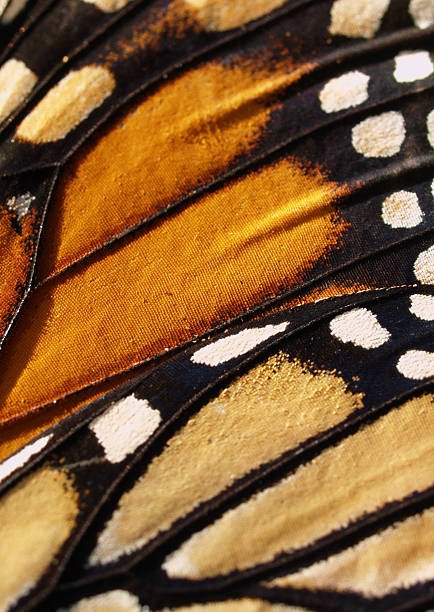
Monarch wings span 3.5–4 inches and are covered in millions of tiny scales that create their iconic orange-and-black pattern. The vivid orange comes from pigments, while the black veins provide structural support. White spots along the borders serve as additional warning signals. Unlike most butterflies, monarchs have thicker, more durable wings — an adaptation for their extraordinary long-distance migration.[1]

Extreme close-up of a monarch butterfly showing head, compound eyes, and coiled proboscis

Body — Three Segments, Infinite Adaptations

Like all insects, monarchs have three body segments. The head houses two large compound eyes (each with ~12,000 lenses), a coiled proboscis for drinking nectar, and two clubbed antennae containing both a sun compass and a magnetic compass for navigation. The thorax powers flight with four wings and six legs. The abdomen contains the digestive and reproductive systems — and stores the toxic cardenolides that make monarchs poisonous to predators.

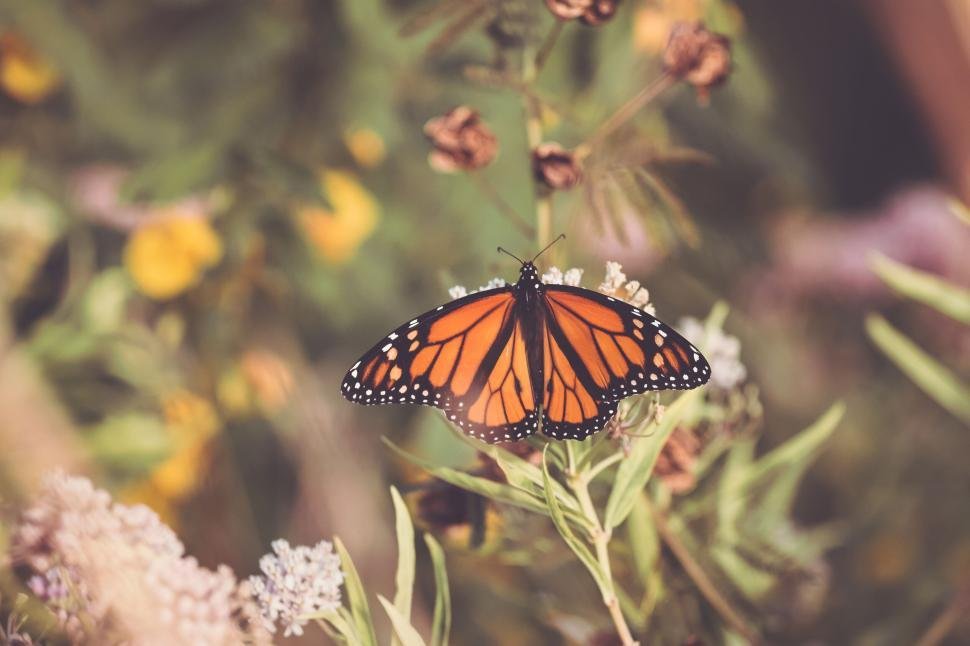
Monarch butterfly perched on milkweed flower demonstrating its sensory abilities

Senses — Tasting with Their Feet

Monarchs experience the world very differently from us. They have chemoreceptors on their tarsi (feet) that let them taste plants simply by landing on them — this is how females identify milkweed for egg-laying. Their compound eyes can see ultraviolet light invisible to humans, and their antennae detect both scent molecules and Earth's magnetic field. This multi-sensory toolkit is what makes their incredible migration possible.

🔬 Did You Know?

Monarchs have six legs, but they often appear to have only four. Their two front legs are much smaller and tucked close to the body — they're used for grooming and sensory input rather than walking. This is a trait shared by all members of the family Nymphalidae, also known as "brush-footed butterflies."

Advertisement

Google AdSense Ad Unit — Replace with your ad code

Life Cycle

Complete metamorphosis — four stages of one of nature's most dramatic transformations

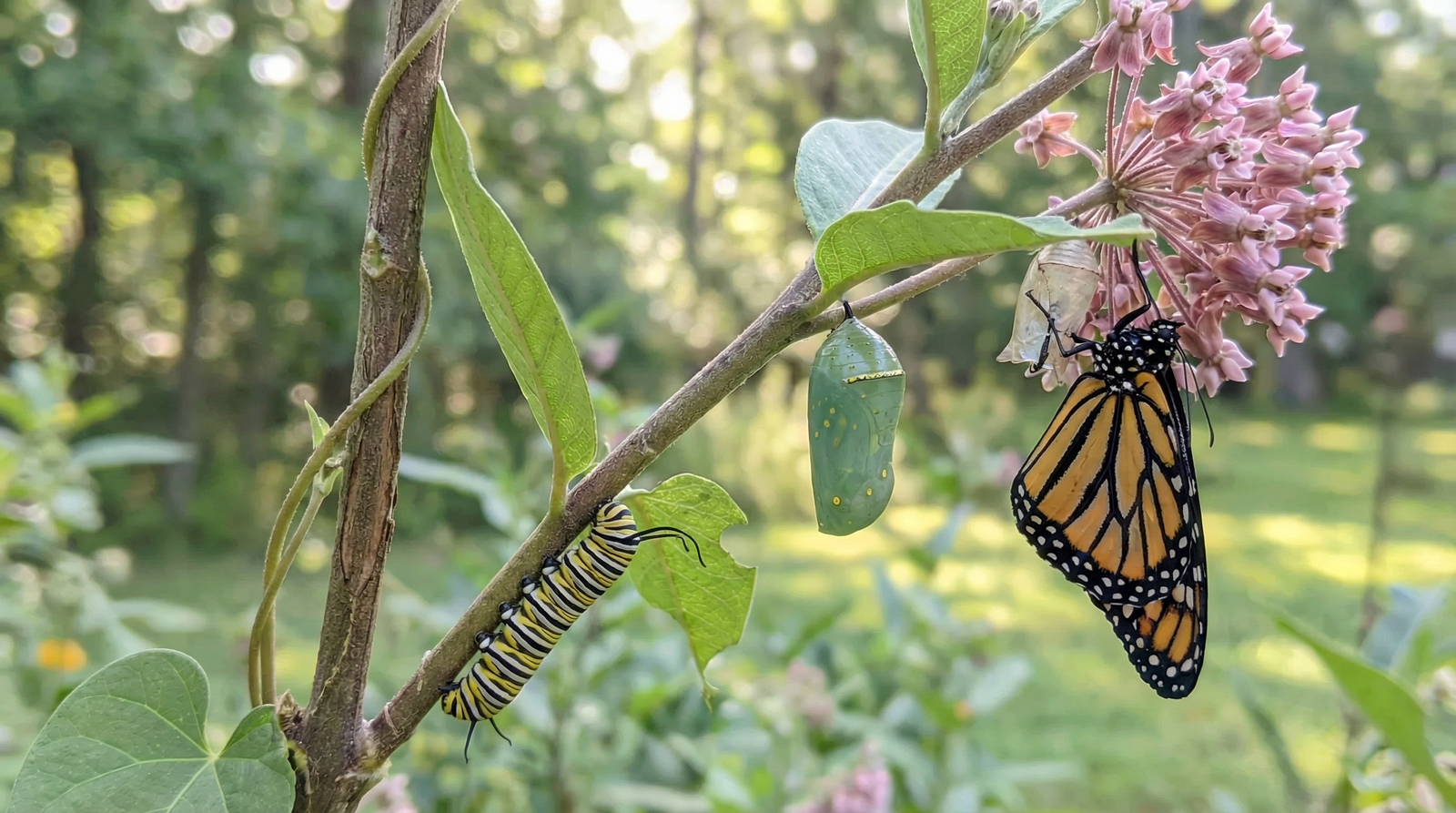
Complete monarch butterfly metamorphosis showing caterpillar, chrysalis, and emerging adult butterfly on milkweed

Complete Metamorphosis

From a tiny egg smaller than a pinhead to a butterfly that can fly 3,000 miles — the transformation takes just 30 days

1

Egg

3–5 days

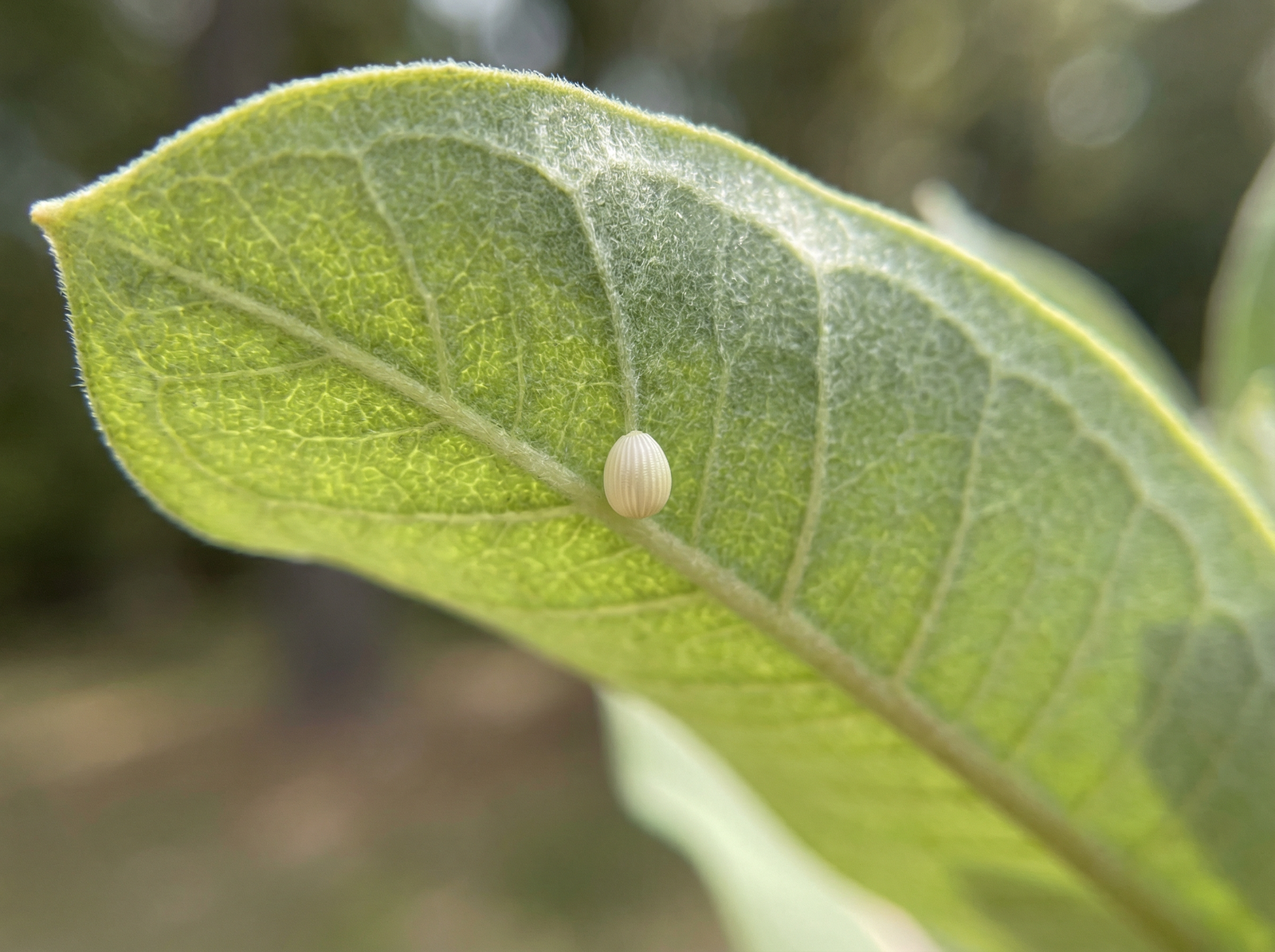
A female monarch lays a single tiny egg (about 1.2 mm) on the underside of a milkweed leaf — never on top. The ridged, cream-colored egg darkens just before hatching as the tiny caterpillar becomes visible inside. A single female may lay 300–500 eggs during her lifetime, but only about 10% survive to adulthood.[7]

Monarch butterfly egg on the underside of a milkweed leaf — scientifically accurate placement
2

Larva (Caterpillar)

9–14 days

The caterpillar eats its own eggshell first, then devours milkweed leaves voraciously. It grows through five instars (molting stages), shedding its skin each time. By the end, it has increased its body mass by approximately 2,700 times. Its bold yellow, black, and white stripes warn predators of the toxins it's accumulating from milkweed.

Monarch caterpillar with distinctive yellow, black, and white stripes feeding on milkweed
3

Pupa (Chrysalis)

8–15 days

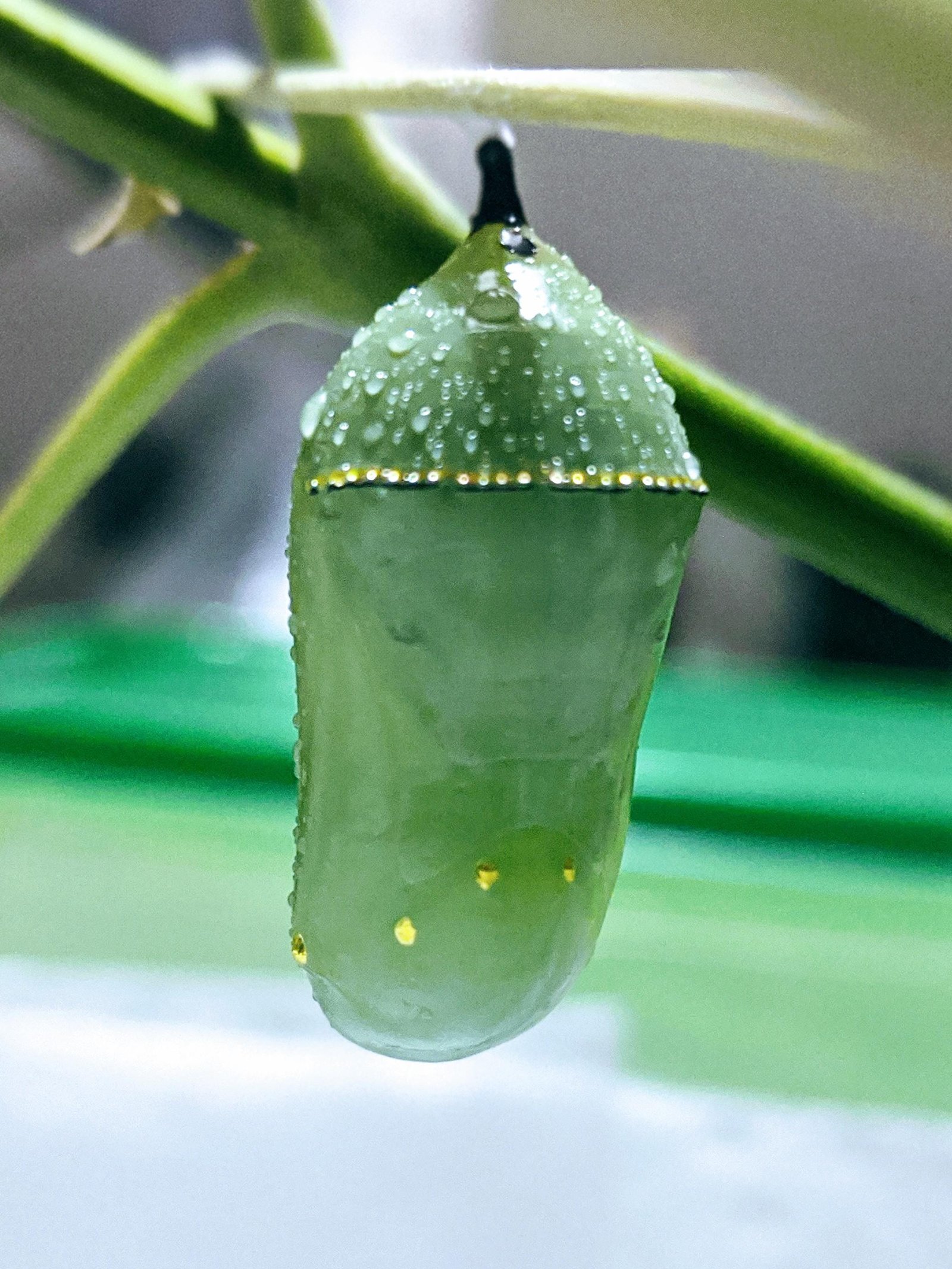
The caterpillar forms a stunning jade-green chrysalis adorned with metallic gold dots. Inside, the caterpillar's body essentially dissolves and reorganizes into a butterfly through a process called histolysis. The gold dots contain carotenoid pigments that create genuine metallic luster — their exact purpose remains debated by scientists.

Monarch chrysalis showing jade green color with metallic gold dots
4

Adult Butterfly

2–6 weeks (or 8–9 months for migrators)

The adult emerges with crumpled, wet wings that expand and dry over 1–2 hours. Most adults live 2–6 weeks, focused on mating and egg-laying. But the "super generation" born in late summer is different — they enter reproductive diapause, migrate thousands of miles south, overwinter, and can live an extraordinary 8–9 months.[1]

Newly emerged monarch butterfly drying its wings next to its empty chrysalis

Advertisement

Google AdSense Ad Unit — Replace with your ad code

Migration

The longest insect migration on Earth — up to 3,000 miles guided by a sun compass and magnetic sense

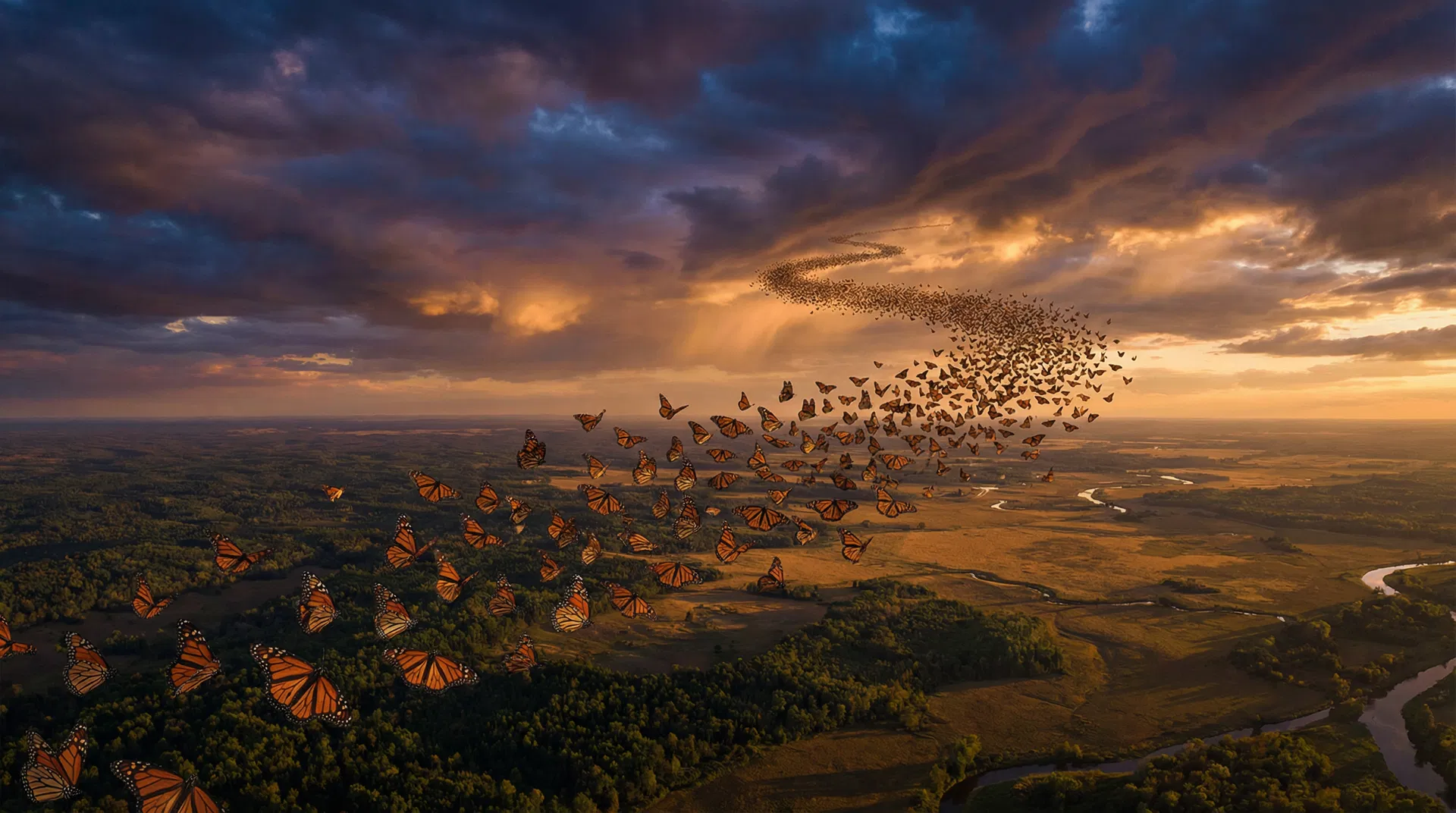
Thousands of monarch butterflies streaming across a dramatic sunset sky during their epic migration

Up to 3,000 Miles

Every autumn, millions of monarchs embark on an epic journey from Canada and the northern United States to their overwintering grounds — and not a single one has made the trip before.

0
Miles traveled
0
Miles per day
0
Max altitude (ft)
0
Months lifespan (migrators)

Eastern Population

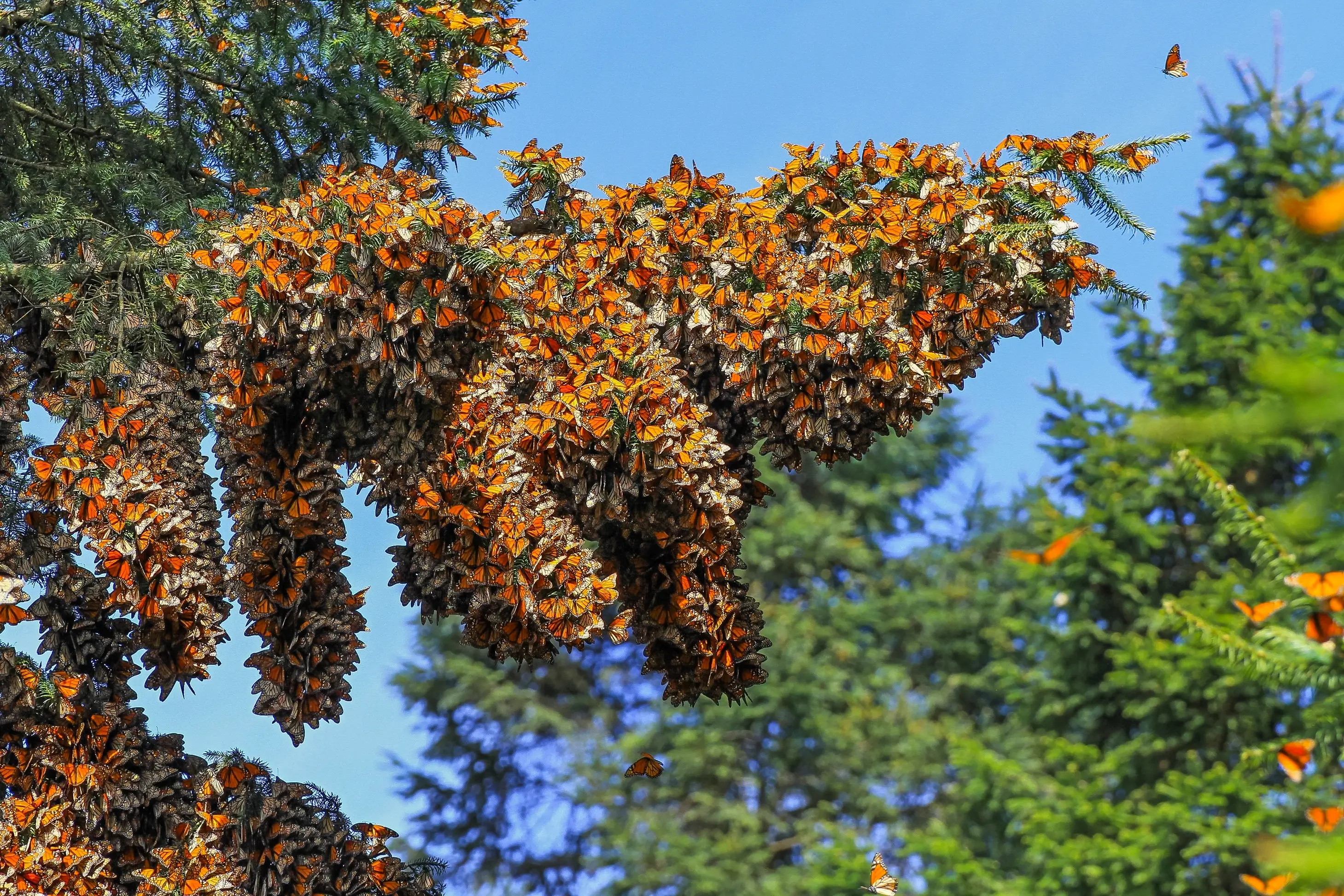
Breeds in the Great Plains and Canada, then migrates up to 3,000 miles to the oyamel fir forests in the mountains of central Mexico (Michoacan).[1][4] They cluster so densely on trees that branches can break under their weight — up to 50,000 butterflies per tree.

Western Population

Breeds west of the Rocky Mountains and migrates to the coast of southern California — places like Pacific Grove and Pismo Beach. While the journey is shorter, these monarchs face even steeper population declines, having lost an estimated 99% of their numbers since the 1980s.[3]

Thousands of monarch butterflies clustering on tree branches at their overwintering site in Mexico

Monarchs clustering at an overwintering site — up to 50,000 butterflies can cover a single tree

Defenses

How monarchs turn poison into protection — and fool predators with their bold colors

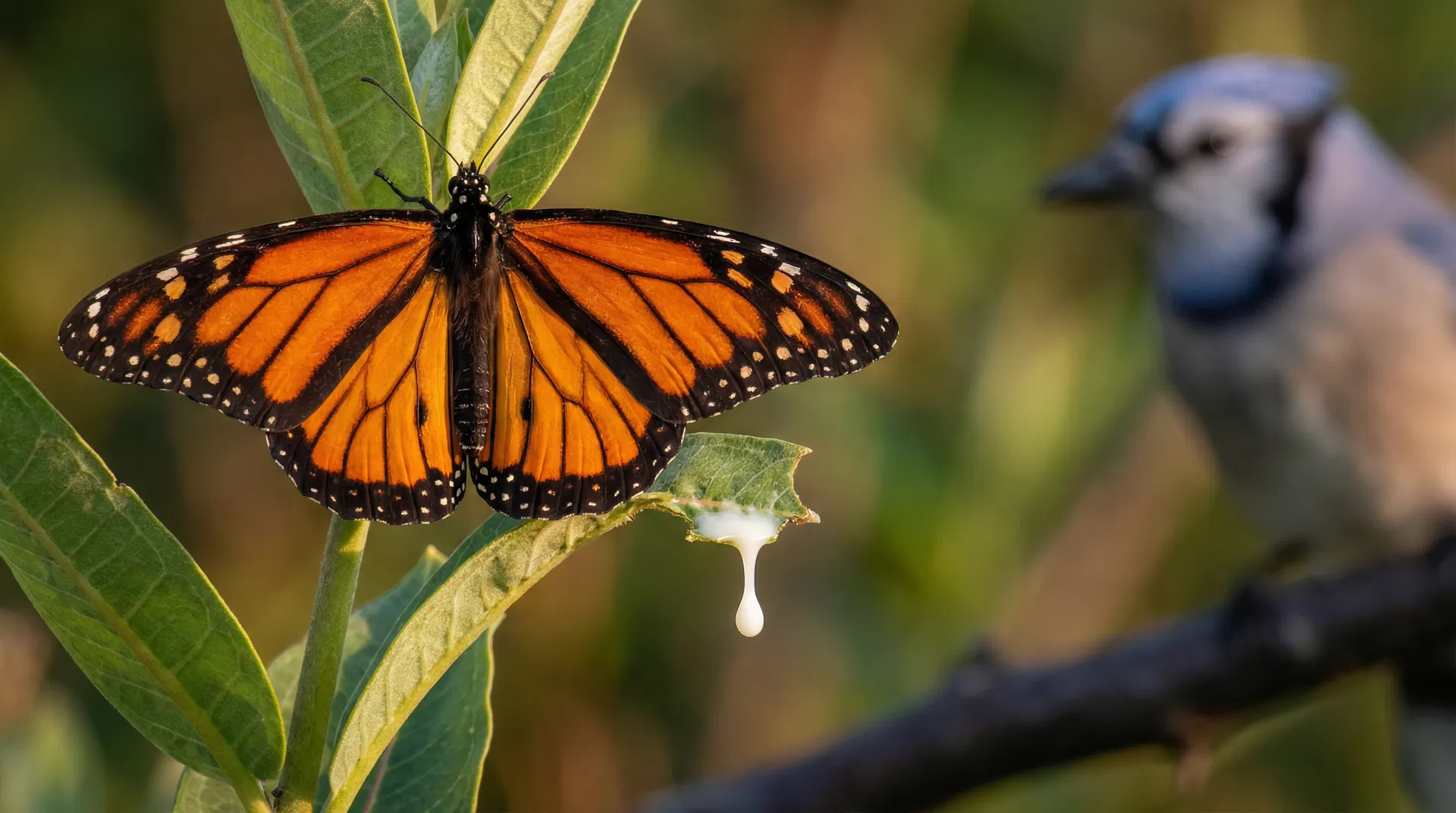
Monarch butterfly displaying warning colors on milkweed with a cautious blue jay in background

Nature's Warning Sign

Those bright orange wings are not just beautiful — they're a bold advertisement that says "Don't eat me!"

Milkweed Toxins

Monarch caterpillars feed exclusively on milkweed, sequestering toxic compounds called cardenolides (cardiac glycosides) in their bodies. These toxins persist through metamorphosis into adulthood, causing vomiting and heart problems in any bird that tries to eat one.

Aposematic Coloring

apo·se·MAT·ic — warning coloration that signals to predators: “I am toxic — don’t eat me.”

The monarch's vivid orange-and-black pattern is a textbook example of aposematic coloring — bright warning colors that signal danger. A bird that eats one monarch and gets sick will remember those colors and avoid all similar-looking butterflies in the future.

Mimicry

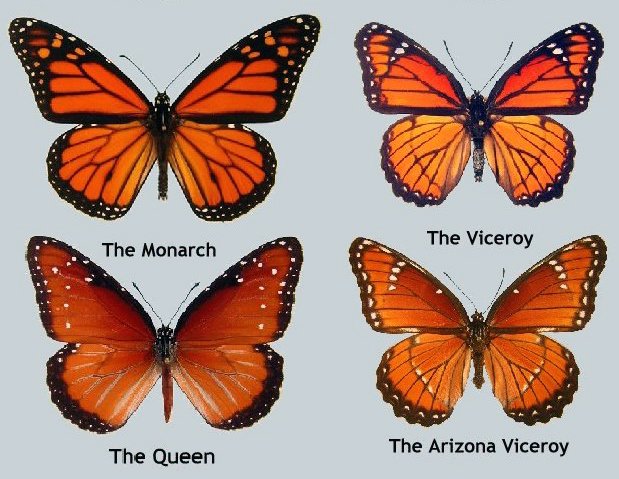
The Viceroy butterfly has evolved to closely resemble the monarch. Scientists once thought this was Batesian mimicry (a harmless species copying a toxic one), but research now shows viceroys are also toxic — making this Müllerian mimicry, where both species benefit from shared warning colors.

Comparison of monarch butterfly, viceroy butterfly, queen butterfly, and Arizona viceroy showing mimicry

The Monarch and its mimics — can you spot the differences?

Advertisement

Google AdSense Ad Unit — Replace with your ad code

Conservation

Monarchs are in trouble — but there's still time to help

A hand planting milkweed in a restored wildflower meadow with monarch butterflies flying nearby

Every Milkweed Plant Matters

80%+

Decline in Eastern monarch population since the 1990s[1][7]

~99%

Decline in Western monarch population from 1980s to 2020 low[3]

2022

IUCN listed the migratory monarch as Endangered[5]

Major Threats

Habitat Loss

Milkweed — the only plant monarch caterpillars can eat — has been decimated by herbicides like Roundup and agricultural expansion. An estimated 1.3 billion milkweed stems have been lost in the U.S. Midwest alone.[9]

Climate Change

Rising temperatures, extreme weather events, and shifting seasons disrupt migration timing and destroy overwintering habitats. Up to half of California's overwintering monarchs were wiped out by extreme storms in a single season.

Illegal Logging

The oyamel fir forests in Mexico where Eastern monarchs overwinter are threatened by illegal logging, reducing the protective canopy that shields butterflies from freezing temperatures.

Pesticides

Neonicotinoid insecticides and other pesticides can kill monarchs directly or contaminate the milkweed and nectar plants they depend on throughout their migration route.

Surprising Facts

Things about monarchs that will genuinely blow your mind

🧲

Built-in Compass

Monarchs can sense Earth's magnetic field through iron-containing cells in their antennae — a backup navigation system for cloudy days when they can't see the sun.

👅

Tasting with Their Feet

Monarchs have chemoreceptors on their tarsi (feet) that let them identify milkweed plants simply by landing on them — no tongue required!

Real Gold in the Chrysalis

The metallic gold dots on a monarch chrysalis aren't just decorative — they contain carotenoid pigments that create genuine metallic luster. Scientists still debate their exact purpose.

🏔️

High-Altitude Flyers

Monarchs have been spotted by glider pilots at altitudes up to 11,000 feet. They ride thermal updrafts to conserve energy, gliding for miles without flapping.

📈

2,700x Growth

A monarch caterpillar increases its body mass by approximately 2,700 times during the larval stage — that's like a 7-pound human baby growing to 19,000 pounds in two weeks!

🧬

Millions of Years Old

Genetic evidence suggests monarchs have been migrating across North America for millions of years. The species likely originated in North America before spreading worldwide.

🌳

Branch-Breaking Clusters

At overwintering sites in Mexico, monarchs cluster so densely that tree branches can snap under their weight — with up to 50,000 butterflies covering a single tree.

⏱️

Slow-Motion Wings

Monarchs flap their wings only 5–12 times per second — incredibly slow compared to bees (200+ times/sec) or hummingbirds (80 times/sec). Their large wings make each flap count.

🗺️

First-Time Navigators

The monarchs that migrate south in autumn have never made the journey before — and neither did their parents. They navigate entirely by instinct, using a sun compass and magnetic sense inherited through their genes.

Test Your Knowledge

Five questions to see how much you've learned about monarchs

Frequently Asked Questions

Common questions about monarch butterflies — answered with science

Milkweed (genus Asclepias) is the sole food source for monarch caterpillars — they cannot survive on any other plant. Female monarchs have chemoreceptors on their feet that detect milkweed's unique chemical signature. The caterpillars also sequester toxic cardiac glycosides (cardenolides) from milkweed, which makes them poisonous to predators throughout their entire life cycle.
Monarchs use a remarkable dual navigation system. Their primary tool is a time-compensated sun compass — a circadian clock in their antennae adjusts their heading as the sun moves across the sky. When it's cloudy, they switch to a magnetic compass: iron-containing cells in their antennae can detect Earth's magnetic field, as confirmed in a 2014 study published in Nature Communications.
Monarchs are not dangerous to humans. While they carry cardenolides (cardiac glycosides) from the milkweed they ate as caterpillars, these toxins are present in very small amounts and primarily affect birds and other small predators that try to eat them. You can safely handle a monarch butterfly — just be gentle with their delicate wings.
Most adult monarchs live only 2–6 weeks. However, the special "super generation" born in late summer is different — these are the monarchs that migrate south, and they can live an extraordinary 8–9 months. This extended lifespan allows them to complete the migration, overwinter in Mexico or California, and begin the return trip north in spring.
Monarch populations have declined due to four main threats: habitat loss (an estimated 1.3 billion milkweed stems lost in the U.S. Midwest from herbicide use), climate change (extreme weather disrupting migration and overwintering sites), illegal logging in Mexico's oyamel fir forests, and widespread pesticide use including neonicotinoids. The Eastern population has declined over 80% since the 1990s.
While monarchs and viceroys look very similar with orange-and-black wing patterns, viceroys are slightly smaller and have a distinctive black line running across their hind wings that monarchs lack. Scientists once believed viceroys were harmless mimics of toxic monarchs (Batesian mimicry), but research has shown that viceroys are also toxic — making this Müllerian mimicry, where both species benefit from shared warning colors.
Monarchs cannot survive freezing temperatures for extended periods, which is why they migrate. Eastern monarchs overwinter in the oyamel fir forests of central Mexico at elevations around 10,000 feet, where cool but above-freezing temperatures slow their metabolism. Western monarchs overwinter along the California coast. They enter a state called diapause — a kind of hibernation where they cluster together on trees for warmth.
Eastern monarch butterflies migrate up to 3,000 miles (4,800 km) from southern Canada and the northern United States to their overwintering grounds in central Mexico. They travel an average of 50–100 miles per day, riding thermal updrafts to conserve energy. Some have been recorded at altitudes of 11,000 feet. The entire round-trip journey spans multiple generations.
Monarch caterpillars eat exclusively milkweed (Asclepias species). A single caterpillar will consume approximately 20 milkweed leaves during its 9–14 day larval stage, increasing its body mass by about 2,700 times. Adult monarchs, by contrast, drink nectar from a wide variety of flowers using their long, coiled proboscis.
You can help monarchs by planting native milkweed species in your garden (common milkweed, swamp milkweed, or butterfly weed), creating pesticide-free pollinator gardens with nectar plants like coneflowers and goldenrod, and participating in citizen science programs such as Journey North or the Western Monarch Thanksgiving Count. Even a small balcony planter with milkweed can make a difference.

Advertisement

Google AdSense Ad Unit — Replace with your ad code

Explore & Support

Recommended books, garden kits, and supplies to help you learn more and make a difference

As an Amazon Associate, we may earn from qualifying purchases. Affiliate links below.

Sources & Further Reading

This guide draws on the following peer-reviewed research and authoritative conservation organizations.

1
U.S. Fish & Wildlife Service

Official species profile and conservation status

2
World Wildlife Fund

Monarch butterfly overview and threats

3
Xerces Society for Invertebrate Conservation

Western monarch population data and conservation programs

4
Journey North

Citizen science migration tracking and sightings

5
IUCN Red List — Danaus plexippus

2022 Endangered assessment for migratory monarch

6
North American Butterfly Association (NABA)

Butterfly counts, habitat programs, and identification resources

7
University of Minnesota Monarch Lab

Research on monarch biology, migration, and conservation

8
Guerra et al. (2014), Nature Communications

Evidence for magnetic compass navigation in monarchs

9
Pleasants & Oberhauser (2013), Insect Conservation and Diversity

Milkweed loss and monarch population decline in the Midwest

10
USDA Natural Resources Conservation Service

Milkweed and pollinator habitat restoration

Glossary of Terms

Scientific and technical terms used throughout this guide, explained in plain language.

Aposematic

ap-oh-se-MAT-ic

Warning coloration used by an animal to signal to predators that it is toxic or dangerous. The monarch's vivid orange-and-black wings are a classic example.

Metamorphosis

met-ah-MOR-foh-sis

The biological process of transformation through distinct developmental stages. Monarchs undergo complete metamorphosis: egg → larva → pupa → adult.

Chrysalis

KRIS-ah-lis

The protective casing (pupa) in which a monarch caterpillar undergoes metamorphosis and transforms into an adult butterfly. Monarch chrysalises are jade green with gold dots.

Larva

LAR-vah

The caterpillar stage of a butterfly's life cycle. Monarch larvae are distinctively striped in yellow, black, and white, and feed exclusively on milkweed.

Milkweed (Asclepias)

as-KLEE-pee-as

A genus of flowering plants and the only food source for monarch caterpillars. Milkweed contains toxic cardenolides that monarchs absorb for their own chemical defense.

Cardenolides

car-DEN-oh-lides

Toxic cardiac glycoside compounds found in milkweed plants. Monarchs sequester these in their bodies, making them poisonous to birds and other predators.

Diapause

DY-ah-pawz

A state of suspended development or dormancy triggered by environmental cues such as shortening days or dropping temperatures. Migratory monarchs enter reproductive diapause before their autumn migration.

Proboscis

pro-BOS-is

The long, coiled, straw-like mouthpart that adult butterflies use to drink nectar from flowers. When not in use, it is coiled tightly beneath the head.

Thorax

THOR-ax

The middle body segment of an insect, located between the head and abdomen. In monarchs, all six legs and both pairs of wings attach to the thorax.

Abdomen

AB-doh-men

The rear body segment of an insect, containing the digestive and reproductive organs. In monarchs, the abdomen is black with white spots.

Mimicry

MIM-ih-kree

An evolutionary strategy where one species evolves to resemble another. The viceroy butterfly mimics the monarch's warning coloration. Both species are toxic, making this Müllerian mimicry.

Overwinter

oh-ver-WIN-ter

To survive through the winter season. Eastern monarchs overwinter in the oyamel fir forests of central Mexico; Western monarchs overwinter along the California coast.